
Hypnotherapy Insights
Thoughts, insights and gentle reminders to support your wellbeing and those around you.

When Overthinking Starts Controlling Your Life
Everyone overthinks sometimes, but some people do it more frequently than others…
Read more →
Everyone overthinks sometimes, but some people do it more frequently than others. Some of these individuals could have anxiety disorders, but not everyone does. “There are people who have levels of overthinking that are just pathological.”
“Although the average person also tends to overthink things.” I myself have succumbed to the trap of overthinking. Determined to understand the problem, I decided to speak to psychologists and learn why we are prone to overthinking.
“It’s fair to say as humans we often confuse overthinking with problem-solving.” People who do not understand you may say… “Just stop Anxiety, from Stopping You.” Oh if it was only that easy!🤬 The flippant remarks don’t solve the problem either.
Overthinking is rooted in uncertainty 🧠. “Because we feel vulnerable about the future, we keep trying to solve problems in our head,” “The Worry Trick: How our Brain Tricks us into expecting the worst and What we can do about it.”
I was so eager to finally return to work, after 3 spine surgeries and a brain surgery last year. I wanted so much just to get normality back in my life. However, I wasn’t prepared for the couple of months that followed.
My return to work, as much as it was what I wanted, was making me anxious, I was so worked up… I caused myself some unpleasant physical symptoms, that then drained me. I was overthinking every little detail… it felt as though I was in self destruction mode.
Given my knowledge and experience as a Solution Focused Therapist. I was able to get myself out of the dark hole, with the support of my family, friends and colleagues. If what I’ve shared you can recognise in yourself, then get in touch. Please don’t allow the overthinking to control you. Tomorrow is a new day to seize and enjoy…
Catrina Hughes HPD DSFH
Clinical Hypnotherapist & Psychotherapist

Overthinking is not a choice, It's a Depression Response.
Everyone overthinks sometimes. But some people do it more frequently than others…
Read more →
Everyone overthinks sometimes. But some people do it more frequently than others. Some of these individuals could have anxiety disorders, but not everyone does. “There are people who have levels of overthinking that are just pathological.”
“Although the average person also just tends to overthink things.” I myself have succumbed to the trap of overthinking. Determined to understand the problem, I decided to speak to psychologists and learn why we are prone to overthinking.
“It’s fair to say as humans we often confuse overthinking with problem-solving.” People who do not understand you may say… “Stop Anxiety from Stopping You.” This doesn’t solve the problem though.
Overthinking is rooted in uncertainty. “Because we feel vulnerable about the future, we keep trying to solve problems in our head,” “The Worry Trick: How our Brain Tricks us into expecting the worst and What we can do about it.”
Picture this: you’ve had a fight with your boss. You start to freak out and tune into the worry channel. Your thoughts go in a loop like this: What if he fires me? I was really hoping to buy a house this year. What if I don’t get another job? What if this destroys my career? It can really take off.
Thank you for taking the time to read my posts. If you’ve questions great… ad them to the comments and I will answer them.
Catrina Hughes HPD DSFH
Clinical Hypnotherapist & Psychotherapist

New Year. New Me. Same Dreams. Fresh Start.
Just trying to pick up where I left off in June 2025.
Read more →
Just trying to pick up where I left off in June 2025.
To my loyal friends, family and followers. You know it’s unheard of for me to not be posting on my Hypnotherapy page on a regular basis.
However, for those who don’t know, I’ve had my own health challenges to deal with this last year. You all know how positive I usually am, how I take everything in my stride, and how I am never anxious or stressed out over anything generally.
Well, 2025 changed that…
I experienced first-hand just how debilitating anxiety can be when it takes over. Then, let’s not forget the extremely low moods, when everything is just too much. There’s also the stress of long durations in hospital, multiple spine operations, and worrying over your day job, as you’re now on long-term sick and on nil pay.
To add insult to injury, you return to A&E in October and learn you now have a second subdural haematoma sitting on top of the original bleed. Only this new one is fresh blood, and it’s pushing your brain to the right side of your skull.
Emergency brain surgery it is… 🧠
Finally, health-wise, I’m better than I was, but I have to accept the permanent nerve damage that affects my right leg and my lower spine. I also need to manage my stress levels to avoid pressure on my brain.
Currently, I’m pushing to return to work. I just want to get back to normality, but first I need the OK from DVLA that I can return to driving. It’s so frustrating waiting on other professionals when it’s out of our control.
One thing this traumatic experience has taught me is that I am very fortunate. My knowledge as a Clinical Solution Focused Hypnotherapist has helped me immensely. It’s not been easy, and some days have been worse than others, but I’ve continued working on switching my thoughts and reminding myself to recognise the small positive improvements, while working to avoid the negative thoughts.
During my training as a Solution Focused Hypnotherapist, I learnt how positive changes can correct thought processes, therefore creating new positive neuropathways in the brain. I’ve also seen this in my 5 years of practice with my clients.
However, as I reflect on this past year, I’m eternally grateful for having qualified as a Clinical Solution Focused Hypnotherapist. It is my knowledge and my own recorded Hypnotherapy download that has kept me strong when I have felt weak and has helped me maintain a healthy mindset. Had I not had my Hypnotherapy, I don’t think I’d have coped with everything.
Parental concerns re: time online / social media
Parents often express concerns about their teenagers’ online presence due to potential risks…
Read more →
Parents often express concerns about their teenagers’ online presence due to potential risks, such as exposure to inappropriate content, cyberbullying, and privacy issues. Many parents also worry about the impact of social media on their child’s mental health and well-being. However, it’s crucial to strike a balance between monitoring and respecting their privacy to foster open communication and healthy online habits.
Common concerns…
Parents worry that teenagers can encounter harmful content, such as pornography, violence, or hate speech online.
Online bullying and harassment are significant concerns, with many parents worried about their children being both victims and perpetrators.
Parents are concerned about teenagers sharing too much personal information online and the potential for it to be misused.
Social media use has been linked to anxiety, depression, and low self-esteem in teenagers.
Parents are concerned about the lasting impact of their child’s online activity and the potential for it to affect future opportunities.
I recommend parents regularly talk to their teenagers about their online experiences, what they’re seeing, and how they’re feeling.
While it’s important to monitor your teenager’s online activity, do so in a way that respects their privacy and fosters trust.
If, as a parent, you have concerns about your child’s online activity, you should contact CEOP.
CEOP stands for Child Exploitation and Online Protection. It is a UK law enforcement agency that focuses on protecting children from sexual abuse and exploitation, both online and offline. CEOP also provides resources and support for children, parents, and professionals to help them stay safe online.
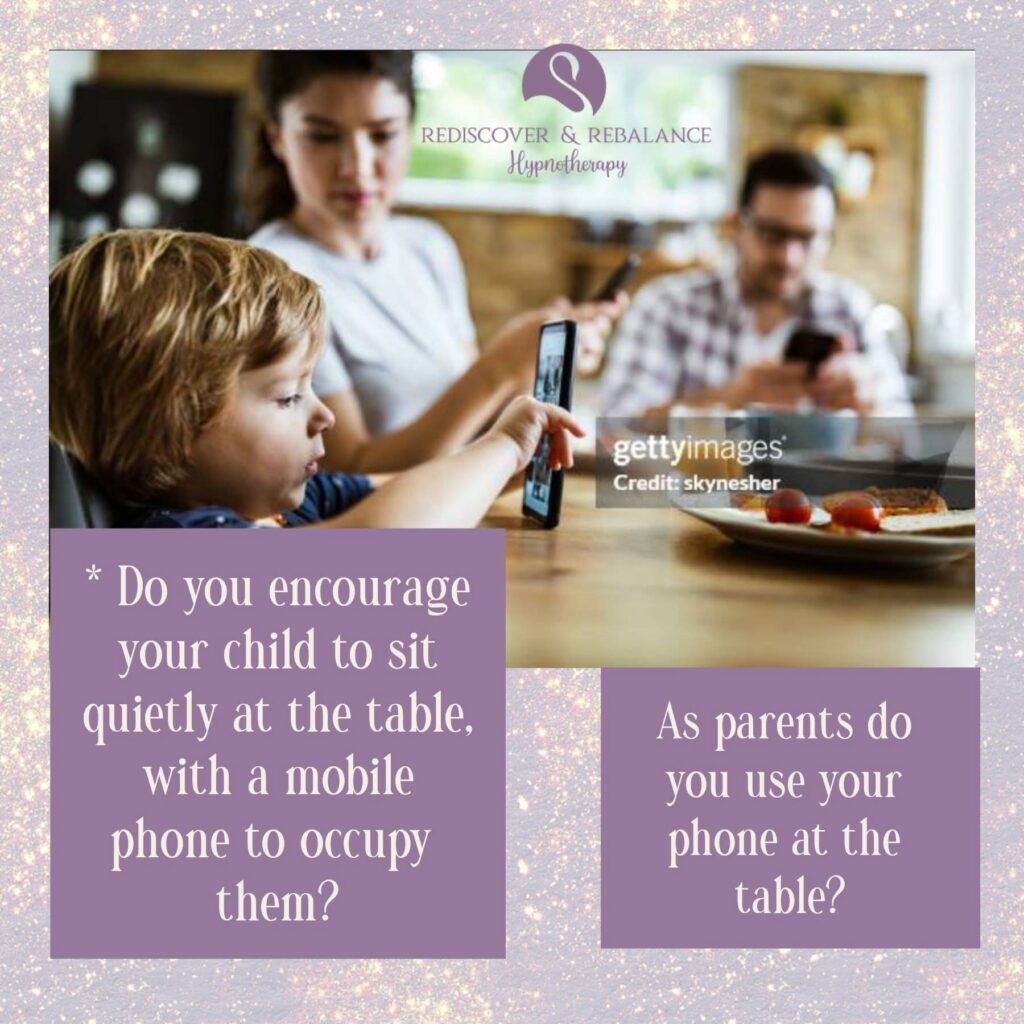
As parents, we need to think of the examples we set for our children. If parents are constantly on their devices, children are likely to do the same.
Handing a young child your phone at the dinner table does disrupt family time. It also limits social interaction and can then lead to unhealthy habits. Therefore, parents are advised that phones should be kept away during meals to encourage conversation and a more positive association with mealtimes.
It’s sad to see tables in restaurants where Mum, Dad, and two siblings are all on their phones at the table, and not one of them is in a conversation.
#letsgetbacktotalking
#conversationsarekey
#nomobiledevicesatthedinnertable
#familytime
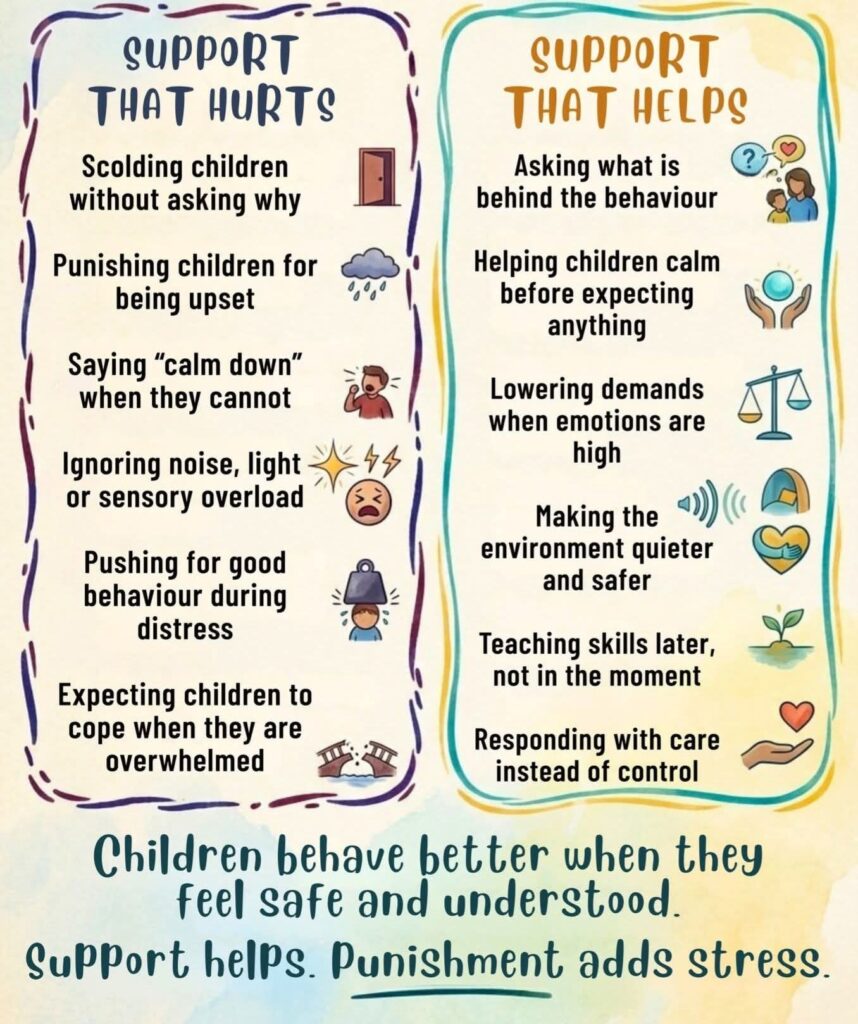
Support That Helps: Children Behave Better When They Feel Safe and Understood
We’ve all heard that parent, or been that parent, who has lost their patience with their child.
Read more →
We’ve all heard that parent, or been that parent, who has lost their patience with their child. Raised our voice in temper, said things we shouldn’t have.
As adults, we need to correct how we speak to our children. When they are overwhelmed, upset, or overloaded, their brains are not choosing to be difficult. They are struggling to cope…
Shouting, punishment, and demands in those moments do not teach skills. Instead, we as parents/guardians are adding pressure to a system that is already overloaded.
Telling a child to calm down when they cannot, pushing for good behaviour during distress, or ignoring sensory overload often makes situations worse. Not because, as adults, we do not care, but because we are taught that control equals support. But it doesn’t.
Children/teenagers do better when they feel safe, not when they feel managed. They calm when demands drop. They learn when emotions settle. Regulation comes before reasoning, every time.
If we want better behaviour, we have to start with better support. That means asking what is behind the behaviour, not how to stop it. It means responding with care instead of control. And it means remembering that children are not giving us a hard time, they are having a hard time.
This shift changes everything for children, families, and professionals.
In my practice, I work with children, teenagers, and parents, depending on what seems to be the underlying issue. It can be bullying at school, parents separating, a shift in friends, self-harming, low self-esteem, or just struggling in school, and the list goes on.
If you know someone who would benefit from this post, tag them or share this post to help raise more awareness.
#BehaviourIsCommunication #EmotionalRegulation #ConnectionBeforeCorrection
#ChildMentalHealth #TraumaInformed #PositiveDiscipline #SelfRegulation #SupportNotControl
What is emotional regulation in children?
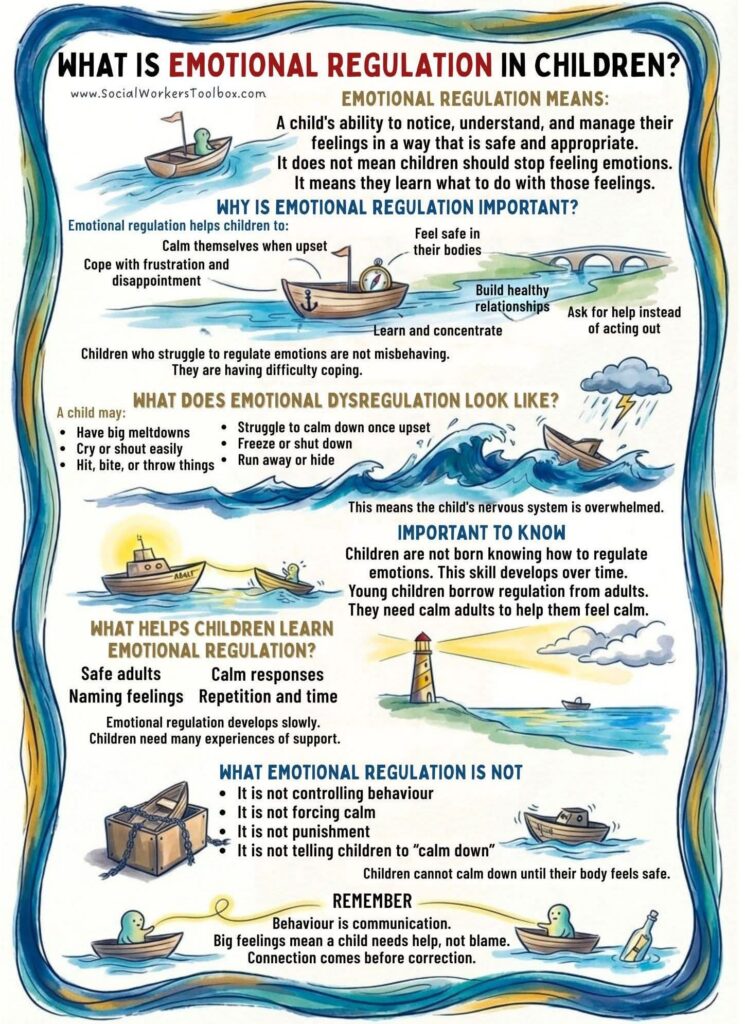
Children are not born knowing how to handle big feelings. When a child shouts, melts down, hits, shuts down, or runs away, it is not bad behaviour.
Read more →
Children are not born knowing how to handle big feelings. When a child shouts, melts down, hits, shuts down, or runs away, it is not bad behaviour. It is a sign their nervous system is overwhelmed and they need support, not punishment.
Responsibility, then, falls to the parents, guardians, or teachers… whoever is the responsible adult at the time. The adult’s role is to help the young person feel safe in the moment, to understand their feelings, and to learn what to do when emotions feel too big.
Children borrow calm from adults. They learn through connection, repetition, and steady, predictable responses. Telling a child to calm down does not work when their body does not feel safe.
When we change how we respond to behaviour, we change the outcomes. Big feelings are just communication. Connection comes before correction. Support builds regulation. Control builds fear.
This understanding can transform how parents, carers, teachers, and professionals support children with emotional and behavioural difficulties, trauma, sensory overwhelm, or ongoing stress.
If, like me, you read this post and begin to reflect on a past situation, as a parent, teacher, or even a child, sharing this information is educational for us all.
Please feel free to like, comment, and share this post. If you’re new to my page, Rediscover & Rebalance Hypnotherapy, hit follow to receive regular information.

Is Your Child Beginning to Stress About Upcoming Exams?
Have you noticed if they’re more irritable, anxious or disorganised?
Read more →
Do you wish you could wave a magic wand, allowing your son or daughter to be calm, focussed, have a healthy revision schedule, driven to do well, but equally composed and in a productive mindset to successfully get the grades they deserve?
𝗜 𝗰𝗮𝗻 𝗵𝗲𝗹𝗽!…
Through regular therapeutic sessions, I can ensure your son or daughter… is relaxed, focused, confident and motivated, as they complete their exams. They will be composed and have a positive mindset, therefore enabling them to succeed. We’ll also work on diminishing any brain fog, exam fears, physical symptoms (anxiety) or self doubt.
𝐇𝐞𝐥𝐩 𝐲𝐨𝐮𝐫 𝐜𝐡𝐢𝐥𝐝 𝐭𝐨 𝐨𝐯𝐞𝐫𝐜𝐨𝐦𝐞 𝐄𝐱𝐚𝐦 𝐒𝐭𝐫𝐞𝐬𝐬 𝐚𝐧𝐝 𝐀𝐧𝐱𝐢𝐞𝐭𝐲.
Sitting a test/exam can be an extremely challenging part of school life for teenagers and young adults. Lets not forget though, It’s also a worrying time for parents or carers. Afterall, no parent wants to see their child scared, anxious, irritable, not sleeping or eating properly.
𝐖𝐚𝐭𝐜𝐡 𝐟𝐨𝐫 𝐭𝐡𝐞 𝐬𝐢𝐠𝐧𝐬:
- Worrying a lot
- Feeling tense/irritable
- Headaches, stomach pains
- Not sleeping well
- Loss of appetite or eating more than normal
- Not enjoying activities they previously enjoyed
- Being negative and low in mood
- Feeling hopeless about the future
- Withdrawn, not interacting with others
- Avoiding school
If you know someone who is struggling, drop me a message.
Exam therapy sessions help immensely, they allow the young person to get the grades they’ve worked so hard for. It’s cruel when success is snatched from our children because of anxiety, panic attack, stomach cramps, stress etc…
Please get in touch to secure regular sessions during exam season, as these appointments book up fast.
#exams2026 #examstress #exams #gcses2026 #ALevel #examtips #gcserevision #revise #revision #solutionfocusedhypnotherapy #postivemindset #positivethinking #mindsetmatters

6 Things That Break a Child's Heart
A child’s heart is delicate. Small, everyday actions from parents, grandparents, and siblings can leave emotional scars..
Read more →
A child’s heart is delicate. Small, everyday actions from parents, grandparents, and siblings can leave emotional scars… 9 out of 10 adults don’t even realise what they are doing. Many parents and grandparents unknowingly engage in behaviours that hurt their child’s/grandchild’s sense of safety, self-worth, and trust.
Having recently been doing some CPD, I realised I haven’t shared the six common ways children can feel emotionally wounded for some time now, so here goes…
Firstly, awareness is the first step towards change; understanding the subtle ways that words and actions impact a child can help parents/guardians to nurture resilience, empathy, and confidence.
6 Things That Break a Child’s Heart:
Dismissing or Minimising Feelings – Telling a child to “stop crying” or “it’s nothing” teaches them that their emotions don’t matter.
Comparing Siblings or Peers – “Why can’t you be more like your brother/sister?” fosters insecurity and resentment.
Excessive Criticism – Constantly pointing out mistakes instead of encouraging growth erodes self-esteem.
Neglecting Quality Time – Failing to spend meaningful moments together makes a child feel unseen and unimportant.
Broken Promises – Not following through on commitments teaches children they can’t rely on others.
Public Humiliation or Shaming – Criticising or embarrassing a child in front of others damages trust and emotional safety.
I dare say, reading this, you may have shaken your head because you’ve recognised some of these responses. You may even recall particular events when you’ve done or said similar things. This doesn’t make you a bad parent… instead, it’s an opportunity to replace those harmful habits with supportive behaviours that strengthen bonds and emotional security.
Every child deserves to feel seen, heard, and loved. Small adjustments in parenting can make a profound difference in shaping a child’s emotional well-being, building a strong foundation for their future happiness and mental health.
Children don’t come with instructions; we make mistakes. What’s important is sharing this knowledge with others, recognising the small changes we need to make to be a better parent and role model for our children.
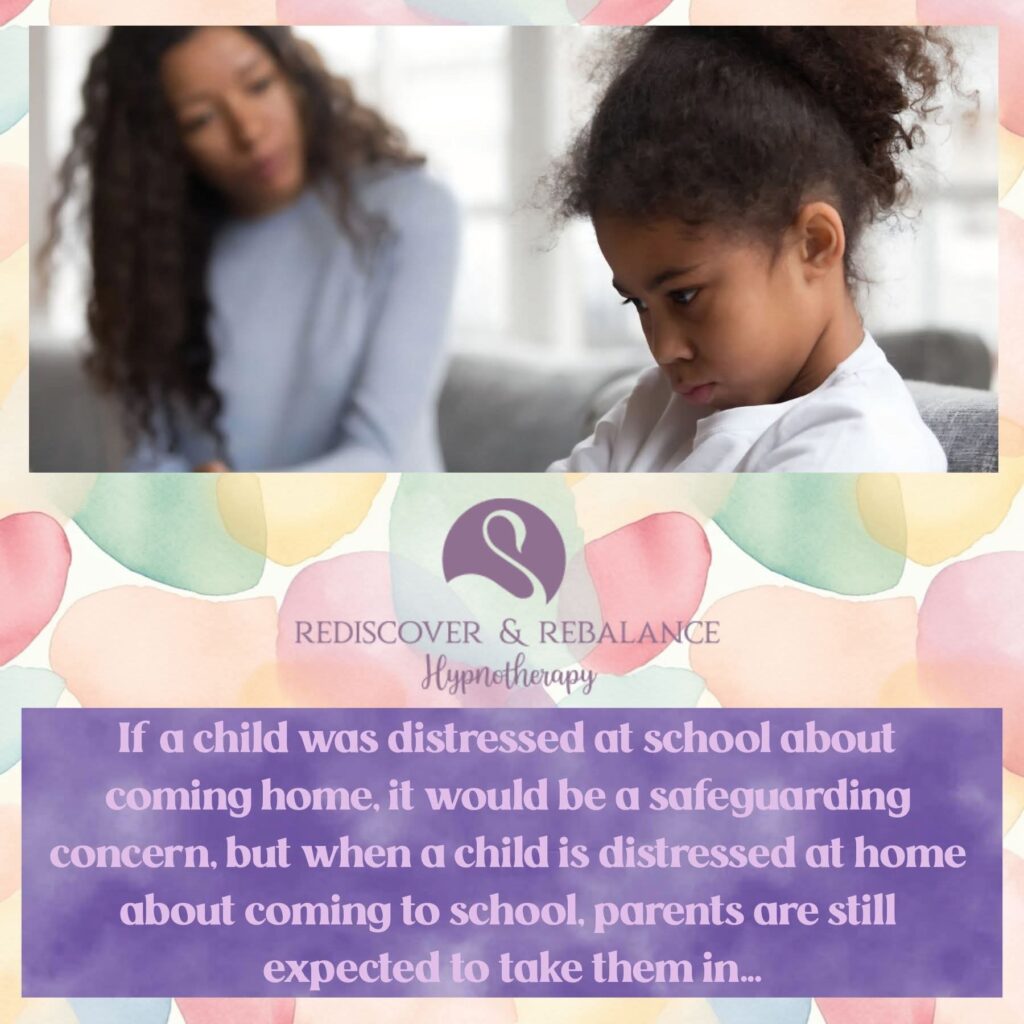
When a Child Is Distressed About Going to School
If a child is distressed at school about going home, it’s instantly seen as a safeguarding concern — and rightly so.
Read more →
If a child is distressed at school about going home, it’s instantly seen as a safeguarding concern — and rightly so. 🚨
However, when a child is distressed at home about going to school, crying, panicking, or shutting down, parents are often still told to “just bring them in.” This double standard is worrying. 😔
No child becomes distressed for no reason. Anxiety, friendship issues, unmet needs, sensory overwhelm, bullying, ill family members, personality clashes with a teacher, social media shame, or unrecognised SEND can all make school feel unsafe and unbearable.
Ignoring this distress not only harms the child’s mental health, but also places unfair pressure on parents, who are left feeling helpless, judged, and unheard. 💔 A child who becomes so upset and doesn’t want to attend school can impact the entire family unit.
No parent should be forced to drag a frightened child into school.
Our children are suffering in this modern, social media world that we live in today. Some children cope just fine, but not everyone does. 🌈💛
In clinic, I can support children and teenagers who are struggling or unable to attend school. I can help parents communicate with school, gather evidence, push for interim reasonable adjustments, whilst continuing to work with the child/teenager to ensure their needs are recognised and met, so that they can enjoy a full education, feeling safe, heard, and valued.
Parents… you do not have to face this alone. If you’re a parent who endures this every school morning… you are not alone. Lots of families face this same nightmare every morning. Speak to the school, share your concerns. 💛🧠
If you feel your child is low in mood, lacks self-confidence, suffers with anxiety, self-harm, etc., there is a lot I can do to help. Please reach out, drop me a message… check out my website:

Support That Hurts vs. Support That Helps
Children behave better when they feel safe and understood. There’s a big difference between support that helps and support that adds stress — here’s what to know…
Read more →
- 🚪 Scolding children without asking why
- 🌧️ Punishing children for being upset
- 🙅 Saying “calm down” when they cannot
- ⚡ Ignoring noise, light or sensory overload
- 🏋️ Pushing for good behaviour during distress
- 😓 Expecting children to cope when they are overwhelmed
- 💬 Asking what is behind the behaviour
- 🤲 Helping children calm before expecting anything
- ⚖️ Lowering demands when emotions are high
- 🔇 Making the environment quieter and safer
- 🌱 Teaching skills later, not in the moment
- ❤️ Responding with care instead of control
A faster path to feeling like yourself again
Solution Focused Hypnotherapy helps you focus on where you want to be — not where you’ve been. Sessions are tailored, compassionate, and often produce results faster than traditional talking therapies.